
House & electronics
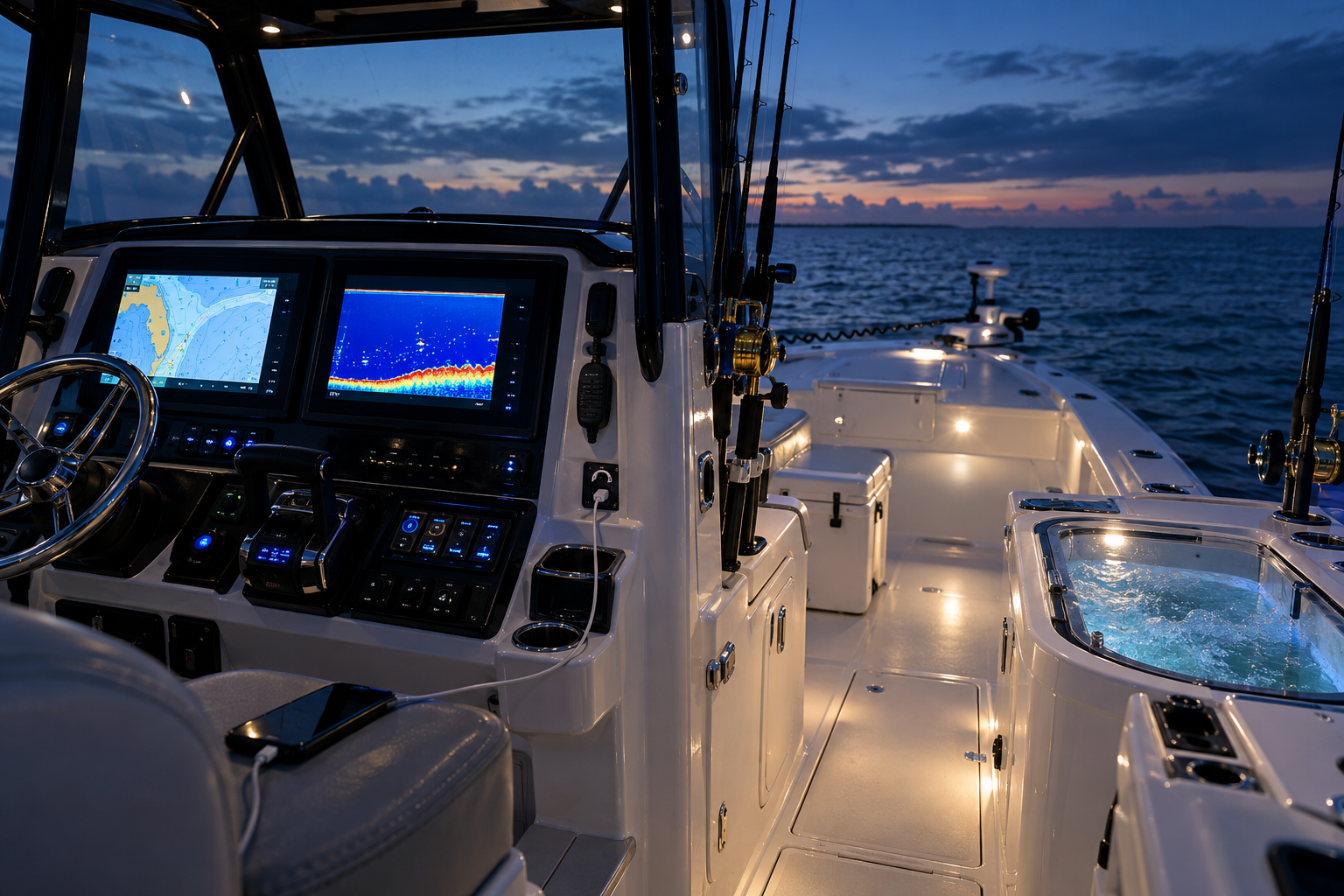
Fishfinders, chartplotters, VHF, livewell, bilge pumps, lighting, USB and refrigeration need a dependable service bank.
MARINE ENERGY / FISHING BOATS
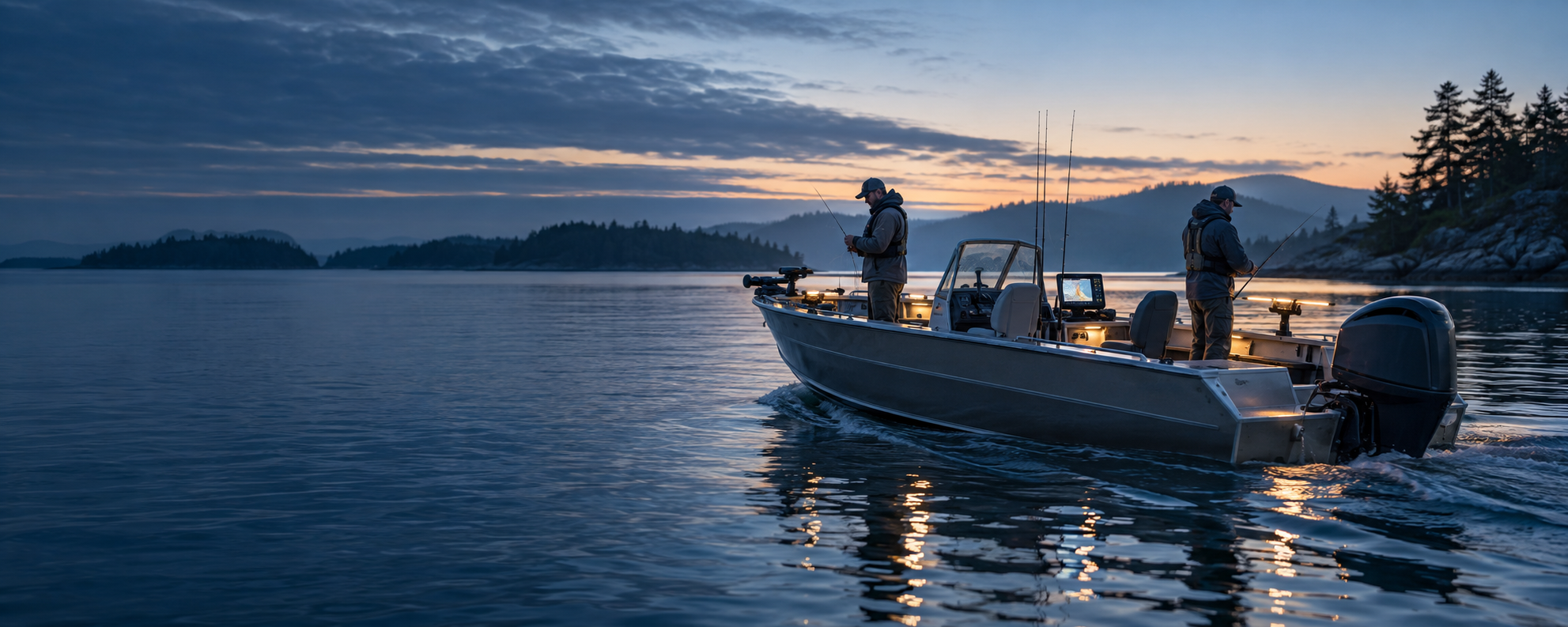
Purpose-built LiFePO₄ systems for fishing boats: separate house loads, trolling motors and electric propulsion, then engineer charging, protection and installation around the vessel.
REAL LOADS, SEPARATE CIRCUITS
Fishfinders, chartplotters, VHF, livewell, bilge pumps, lighting, USB and refrigeration need a dependable service bank.
A dedicated deep-cycle bank delivers quiet positioning without risking the engine-start reserve.
Higher-voltage propulsion requires vessel-level load, cooling, control and reserve analysis—not a larger house battery.
REFERENCE CONFIGURATIONS
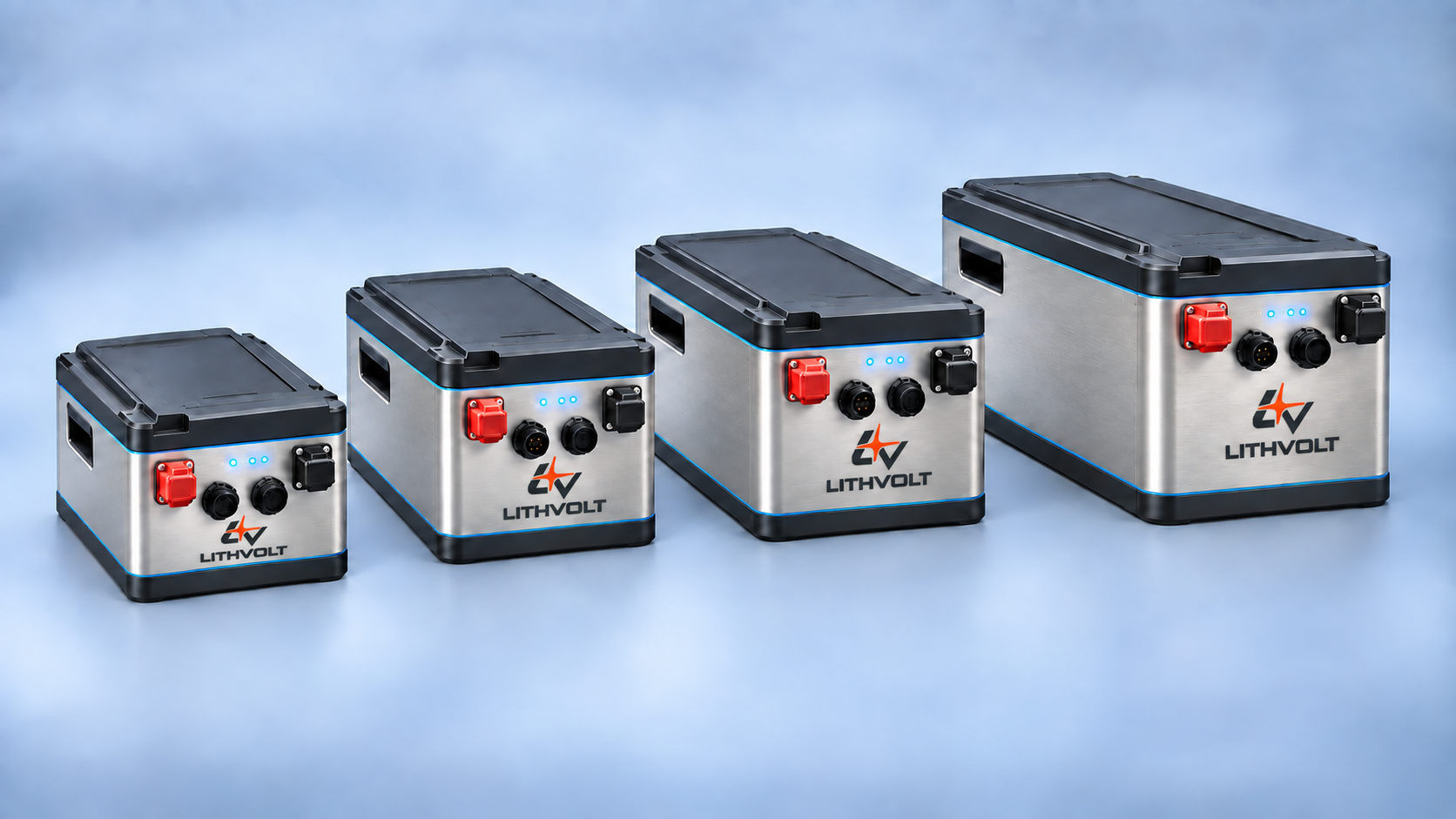
These are practical starting points for early sizing. Final capacity and discharge current follow the exact motor, duty cycle, boat weight and operating conditions.
House loads
Battery12.8 V 100–200 Ah
ChargingShore + alternator/DC-DC + solar
Electronics, pumps, lights, livewell and small refrigeration.
Up to 55 lb thrust
Battery12.8 V 100 Ah
ChargingMatched 12 V lithium charger
Small fishing boats and moderate daily positioning.
68–80 lb thrust
Battery25.6 V 100 Ah
ChargingMatched 24 V lithium charger
Larger hulls, stronger current and longer trolling duty.
101–115 lb thrust
Battery38.4 V 100 Ah
ChargingMatched 36 V lithium charger
Heavy boats, demanding wind/current and long sessions.
Motor thrust brackets follow Minn Kota guidance. Runtime cannot be promised from capacity alone; speed, wind, current, hull and temperature all matter.
APPLICATION SIZING TOOL
Matches trolling/house energy to system voltage, BMS current and charging window.
Planning result
Daily energy
3.70 kWhBattery minimum
5.32 kWhBattery capacity
222 AhBMS current floor
70 ACharger current target
45 AKeep engine-start, essential navigation and trolling/house banks separated unless an approved architecture says otherwise.
Planning estimate only. Final BMS, cable, fuse, charger and inverter settings must be checked against exact equipment data and local rules.
SYSTEM ARCHITECTURE
A marine system is more than a battery. Each source and load needs the correct voltage path, isolation, overcurrent protection and service access.
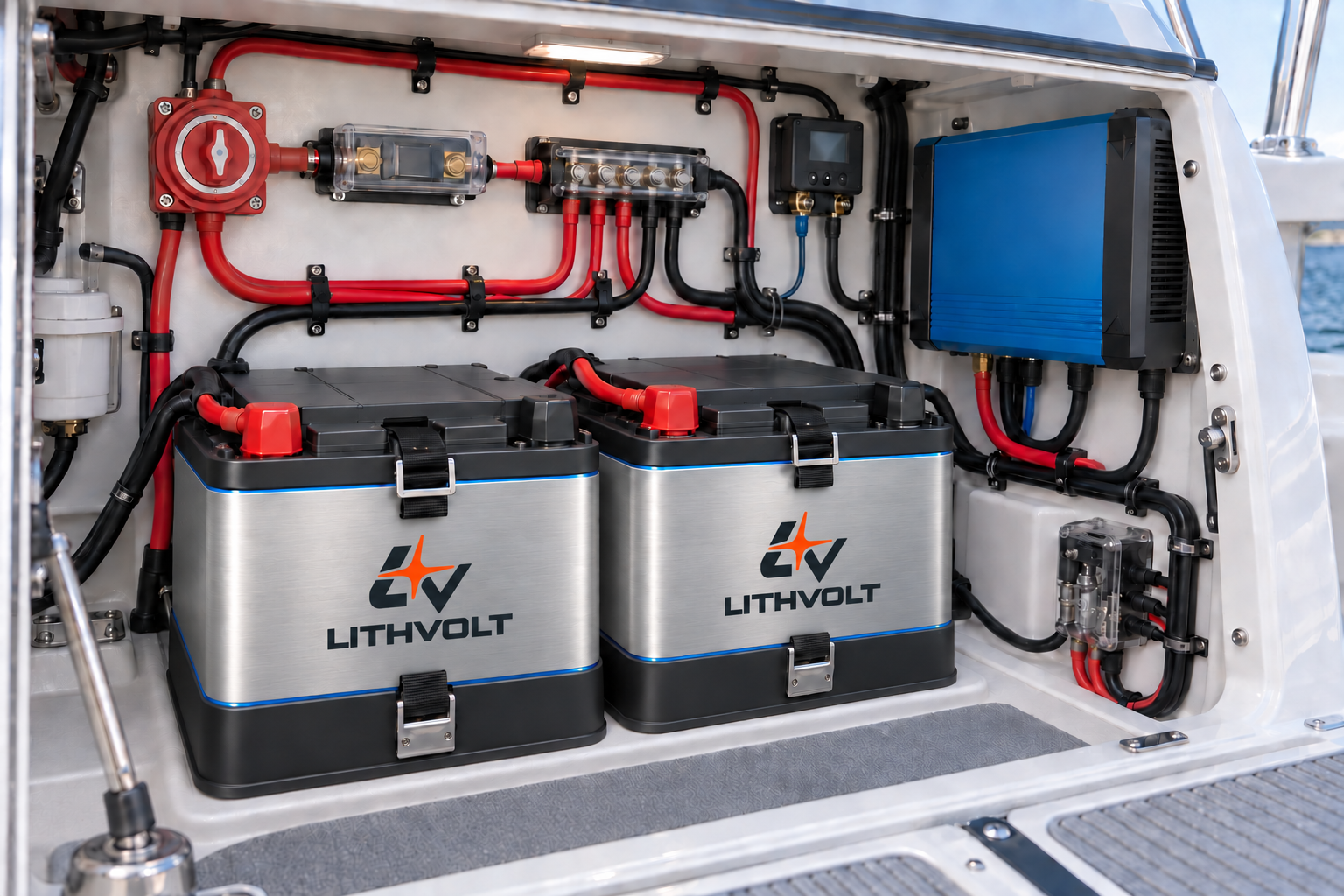
A lithium-compatible charger or inverter/charger manages the correct profile while docked.
An isolated DC-DC charger protects the alternator and controls current between start and service banks.
A correctly sized MPPT adds quiet daytime charging without replacing proper shore or engine charging.
SELECTION WORKFLOW
Record voltage, watts or amps, daily hours and simultaneous operation.
Use the exact motor voltage, maximum draw and manufacturer protection requirement.
Check shore power, alternator data, solar area and time between trips.
Measure space, ventilation, cable routes, moisture exposure and mounting points.
WORKED EXAMPLE
A 24 V trolling motor and 12 V electronics should normally use separate banks. A 25.6 V 100 Ah trolling pack provides 2.56 kWh nominal energy, while a dedicated 12.8 V service pack protects navigation and starting reliability.
OEM / ODM ENGINEERING
We can develop sealed enclosures, BMS limits, communications, cable sets and documentation for boat builders, distributors and fleet operators.
Illustrations show representative systems, not certified final installations. Compliance, ingress rating, protection devices and documentation must be confirmed for the exact battery, vessel, destination market and transport route.
SELECTION WORKFLOW →PROJECT BRIEF
Send the hull, motor model, voltage, maximum current, daily loads, charging sources, compartment size, destination and quantity. We will turn them into a reviewable battery brief.