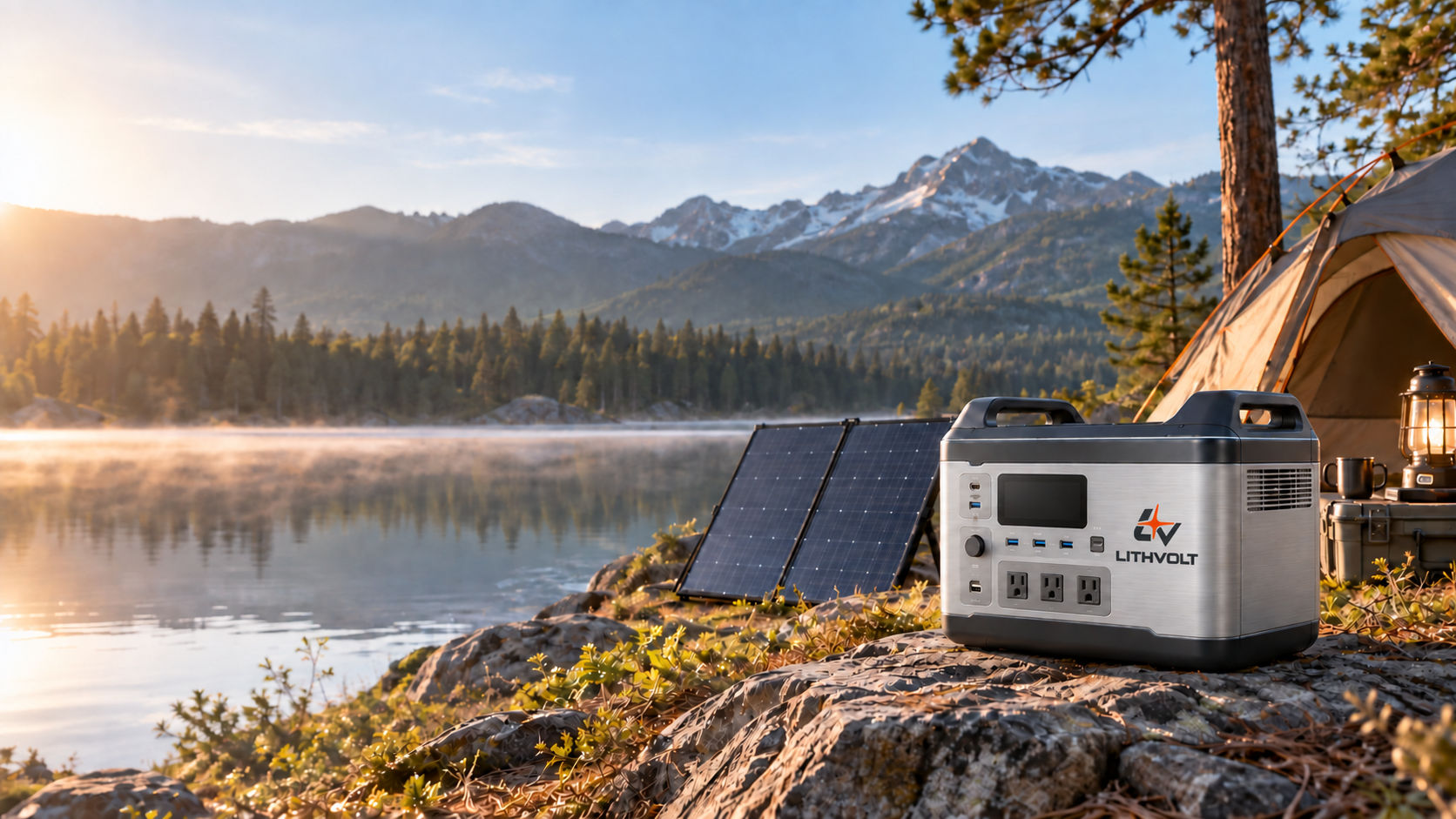
Camping & overlanding
Lighting, phones, cameras, laptops, coolers and cooking devices with planned solar recharge.
PORTABLE POWER / OUTDOOR & EMERGENCY
LiFePO₄ portable power stations balanced for useful capacity, honest continuous output, solar recharge and a weight people can actually carry.
POWER THAT MOVES
Lighting, phones, cameras, laptops, coolers and cooking devices with planned solar recharge.
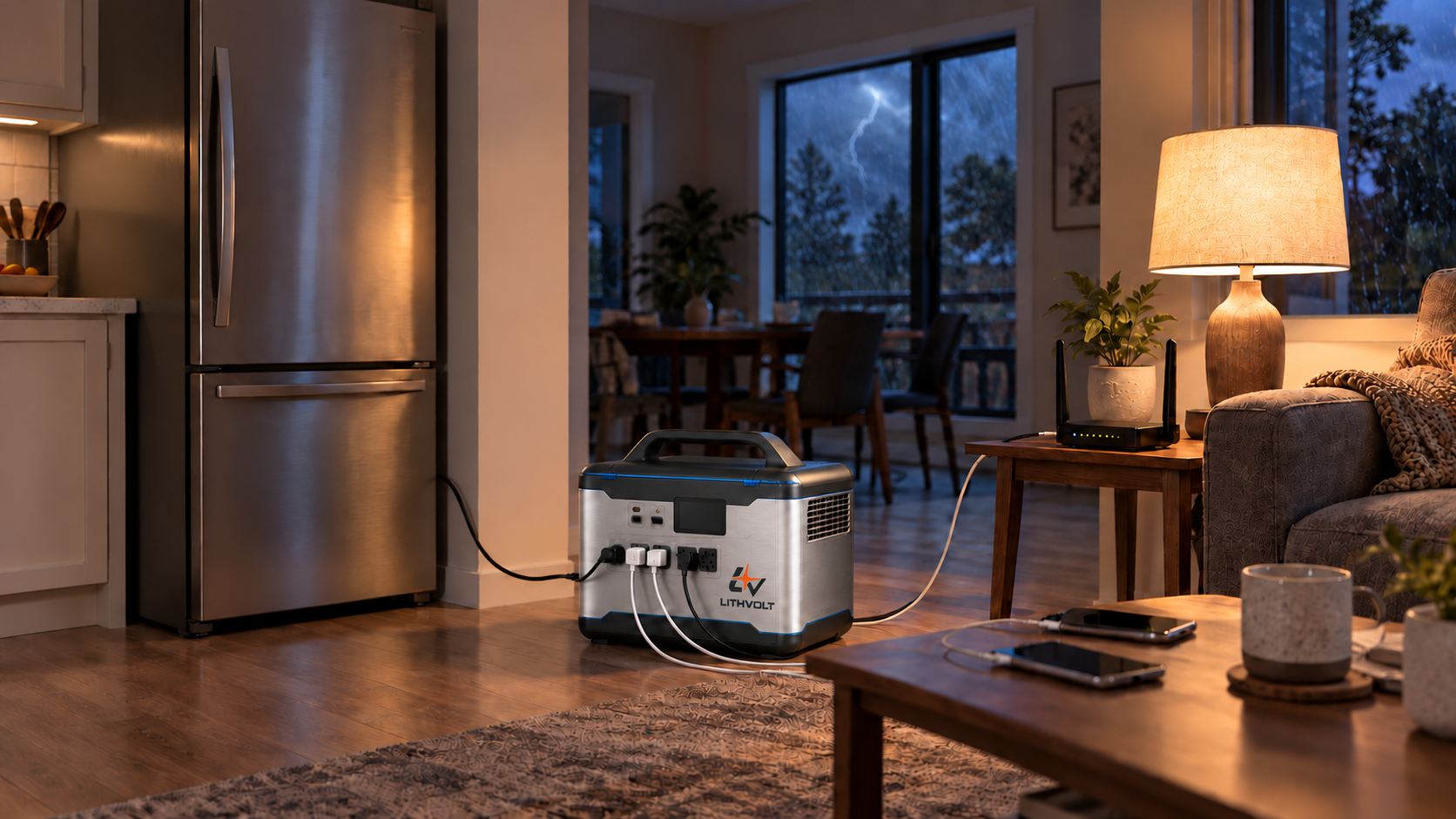
Keep communications, selected lighting and refrigeration running without using a combustion generator indoors.
Power instruments, content gear and moderate tools where extension cords cannot reach.
REFERENCE CLASSES
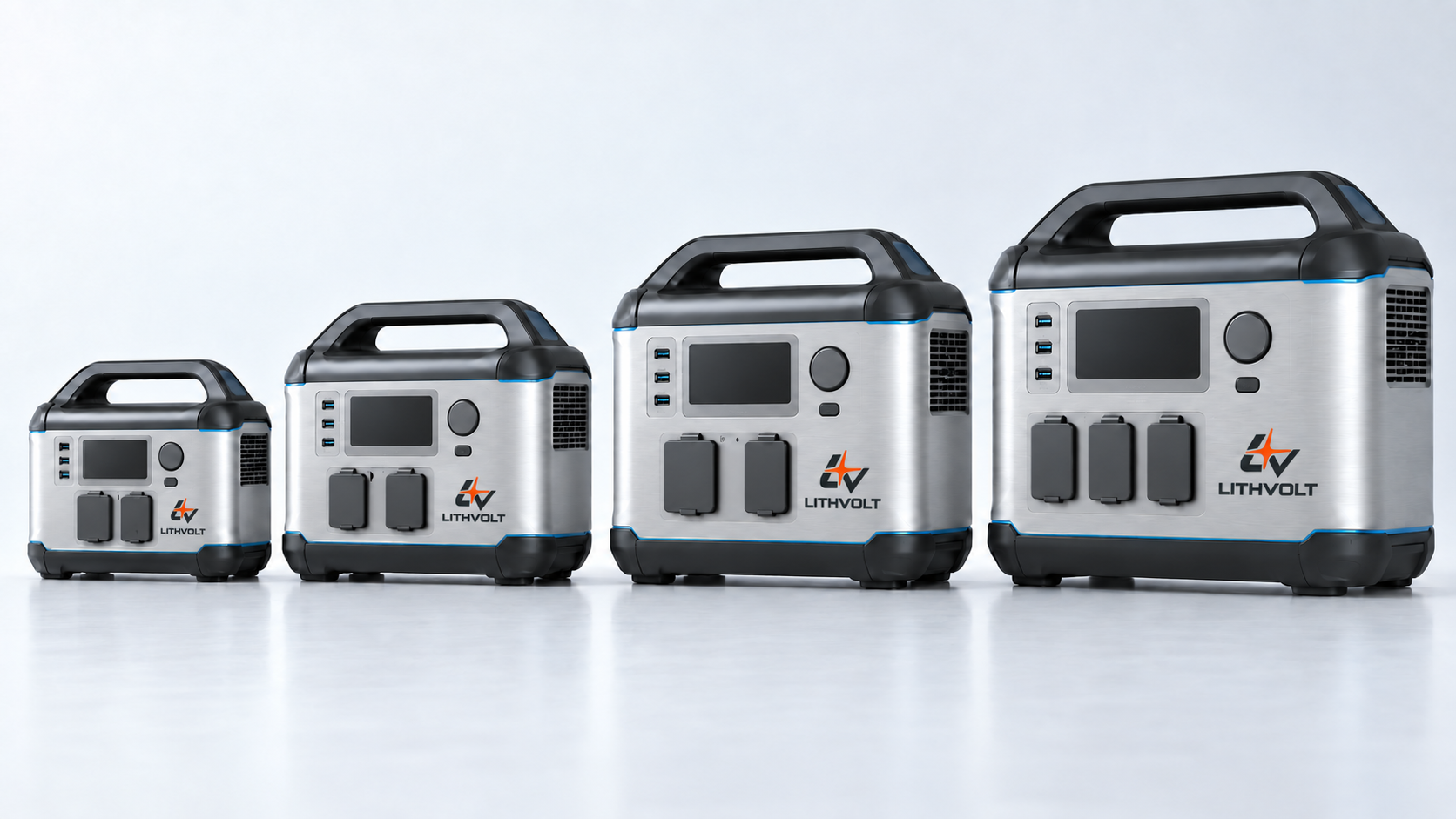
Wh estimates runtime. Continuous W, surge, waveform and outlet voltage decide whether a device can run safely.
Day trips / devices
BatteryLiFePO₄ 256–320 Wh
AC / solar300–500 W / 100 W solar
Phones, camera batteries, router, laptop and lights.
Camping essentials
BatteryLiFePO₄ 512–640 Wh
AC / solar600–800 W / 200 W solar
Devices, lighting, fan, CPAP and efficient cooler.
Outdoor + emergency
BatteryLiFePO₄ 1,024 Wh
AC / solar1,800 W / 400–500 W solar
Refrigerator, electronics, small appliances and moderate tools.
Longer backup / work
BatteryLiFePO₄ 2,048 Wh
AC / solar2,400–3,000 W / 800–1,600 W solar
More runtime and higher-power appliances within verified limits.
Runtime estimate: usable Wh × conversion efficiency ÷ average load W. Nameplate capacity, inverter losses, standby draw, temperature and cycling behavior mean real results are lower. Surge rating is not continuous power.
APPLICATION SIZING TOOL
Balances operating energy, AC surge, trip duration and solar recharge.
Planning result
Daily energy
2.00 kWhBattery minimum
2.78 kWhBattery capacity
109 AhAC inverter starting point
1500 WSolar input starting point
600 WCheck product weight, transport classification, AC voltage/frequency and the exact solar-input voltage window.
Planning estimate only. Final BMS, cable, fuse, charger and inverter settings must be checked against exact equipment data and local rules.
INPUTS & OUTPUTS
A balanced station coordinates cell pack, BMS, pure-sine inverter, AC charger, solar MPPT, DC conversion, cooling and a clear user interface.
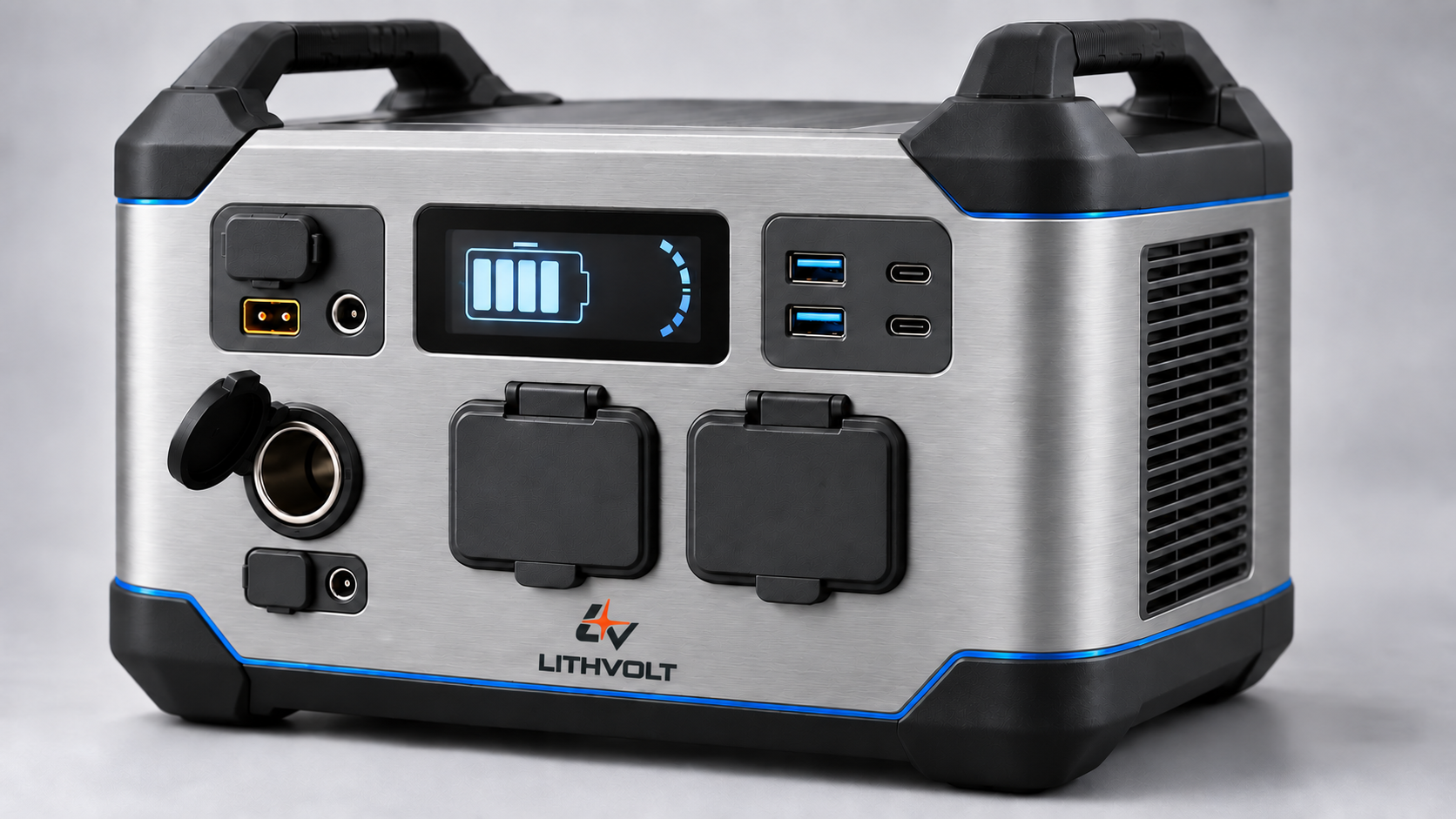
Pure sine output, regional voltage/frequency and motor/compressor starting surge must match the load.
Panel open-circuit voltage, operating current and connector polarity must stay inside the MPPT limits.
High-power USB-C reduces conversion loss for laptops; regulated 12 V supports coolers and vehicle accessories.
SELECTION WORKFLOW
Record running watts, starting watts, daily hours and which devices overlap.
Multiply average watts by hours, then add inverter and standby losses plus reserve.
Confirm AC voltage/frequency, outlet type, USB-C power and regulated DC needs.
Compare AC, vehicle and realistic solar input with the time available between uses.
WORKED EXAMPLE
A 60 W laptop for 5 hours plus a 40 W cooler averaging 10 hours uses about 700 Wh before losses. A nominal 1,024 Wh station is a more realistic class than 512 Wh, but actual cooler duty cycle and solar availability still need checking.
OEM / ODM PORTABLE ENERGY
We develop coherent capacity tiers, enclosure language, regional outlets, BMS/inverter parameters and accessory kits for outdoor and energy brands.
Images and classes are illustrative and do not certify a product or guarantee runtime. Exact battery, inverter, ports, ingress protection, charger, solar limits and compliance must be confirmed for each model and destination.
SELECTION WORKFLOW →PROJECT BRIEF
Share destination market, devices and watts, operating hours, AC voltage/frequency, solar requirement, target weight, ports, quantity and certification plan.