Daily DC loads
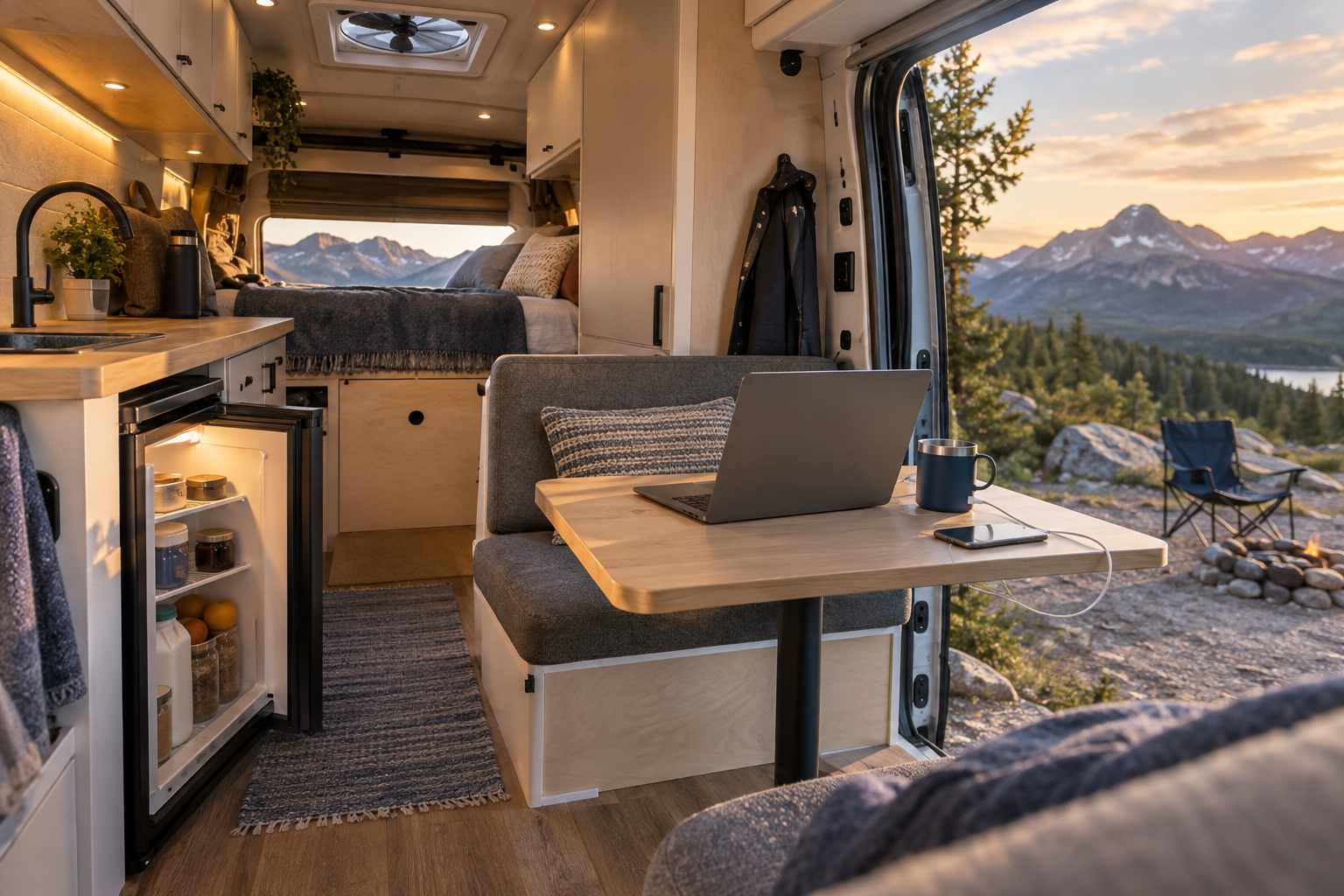
Lighting, vent fans, water pump, USB-C devices and a compressor refrigerator are best served directly from the DC bus.

RV POWER / ENGINEERED HOUSE BATTERIES
LiFePO₄ house-battery systems for camper vans, towables and motorhomes—configured around real loads, installation space and three charging sources.
REAL USE / ONE SYSTEM
Lighting, vent fans, water pump, USB-C devices and a compressor refrigerator are best served directly from the DC bus.
Laptops, TV, coffee makers and microwaves add AC demand; inverter rating and surge current must be checked together.
Solar yield, alternator charging and shore-power availability decide how quickly the battery can recover—not capacity alone.
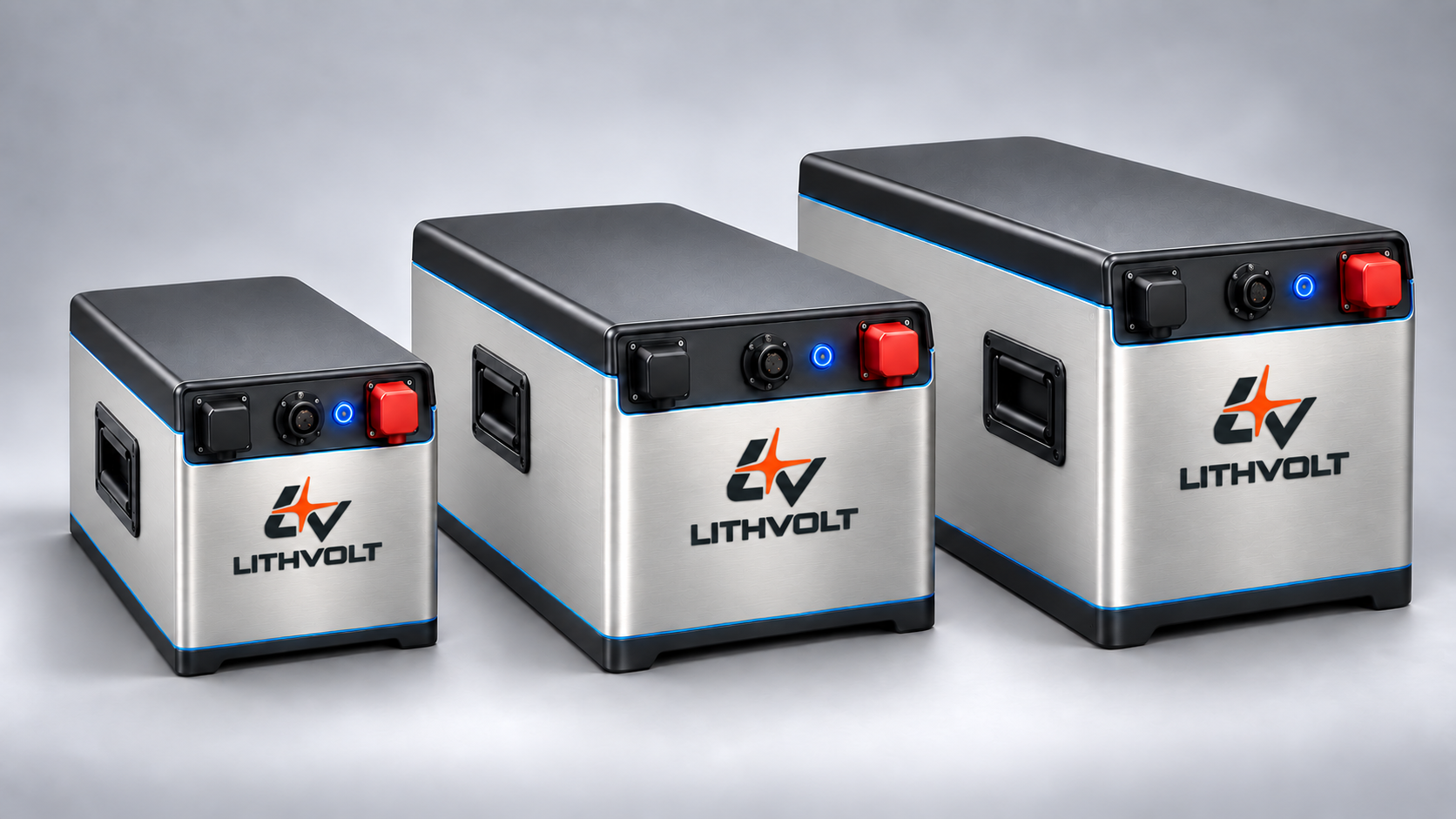
COMMON RV SYSTEM SIZES
These are reference architectures, not universal kits. Final capacity depends on daily energy, simultaneous loads, climate, cable length and available charging.
Compact
Camper van / small towable
Touring
Medium 12V RV
Comfort
Medium / large 12V RV
High-power
Large coach / long cable runs
Reference values align with current published RV system examples from major component makers. 120V or 230V AC output is selected for the destination market.
APPLICATION SIZING TOOL
Separates DC energy, inverter loads, autonomy and roof-solar recovery.
Planning result
Daily energy
2.13 kWhBattery minimum
2.81 kWhBattery capacity
219 AhInverter starting point
2500 WSolar array starting point
650 WAir conditioning and electric water heating require a separate duty-cycle and thermal study.
Planning estimate only. Final BMS, cable, fuse, charger and inverter settings must be checked against exact equipment data and local rules.
THREE WAYS TO RECHARGE
A dependable RV system coordinates the battery, BMS, protection, charging and monitoring. Each energy source needs its own correctly rated path.
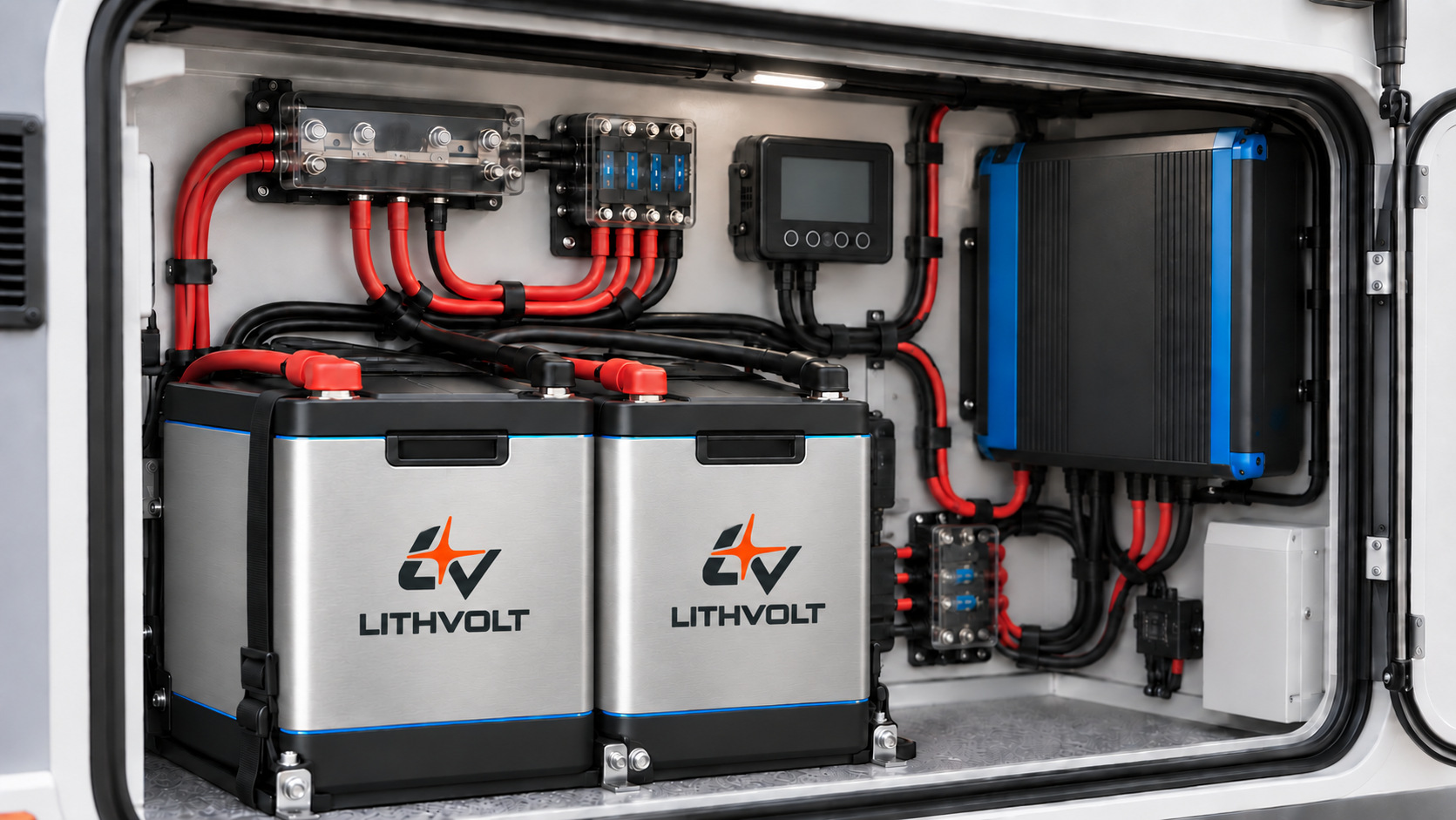
Roof or portable panels feed an MPPT controller sized for array voltage, current and battery voltage.
A current-limited DC-DC charger protects the alternator and gives LiFePO₄ the correct charging profile.
Campground or household AC powers loads and charges the house bank through the correct 120V or 230V equipment.
SIZE BY ENERGY, THEN POWER
For each appliance: watts × hours used per day = Wh/day. For cycling loads such as a refrigerator, use measured or manufacturer daily consumption.
Allow for inverter loss, standby draw, cold weather, battery ageing and days without full charging.
Add simultaneous loads and verify starting surge. Battery BMS, inverter, fuse and cables must all support it.
Compare daily Wh consumed with realistic solar, alternator and shore-power charging—not panel nameplate alone.
Planning example
If daily loads total 1,600Wh and you plan around 80% usable storage, the minimum nominal bank is about 2,000Wh before adding reserve days: 1,600 ÷ 0.8 = 2,000Wh.
OEM / CUSTOM BUILD
LithVolt can configure the enclosure, voltage, capacity, BMS, heating, communications and terminals around an OEM or conversion project.
PRODUCTS · SIZE BY ENERGY, THEN POWER →Runtime and solar recovery vary with the actual appliance duty cycle, temperature, irradiance, installation and system losses. High-power appliances—especially air conditioning and electric water heating—require a project load study.
RV PROJECT BRIEF
Include vehicle type, destination, DC and AC loads, daily runtime, available roof area, alternator data, installation space and expected quantity.