
Course fleets
Predictable shifts, centralized charging and less daily maintenance for high-utilization fleets.

GOLF CART ENERGY / FLEET & PRIVATE
Integrated LiFePO₄ packs for 36 V, 48 V and 72 V carts—engineered around the motor controller, peak current, regenerative braking, charger and vehicle packaging.
FROM FAIRWAY TO FLEET
Predictable shifts, centralized charging and less daily maintenance for high-utilization fleets.
Comfort loads, lighting and accessories require a correctly sized DC-DC path—not improvised taps.
Payload, hills, frequent stops and all-day duty demand higher current and thermal margin.

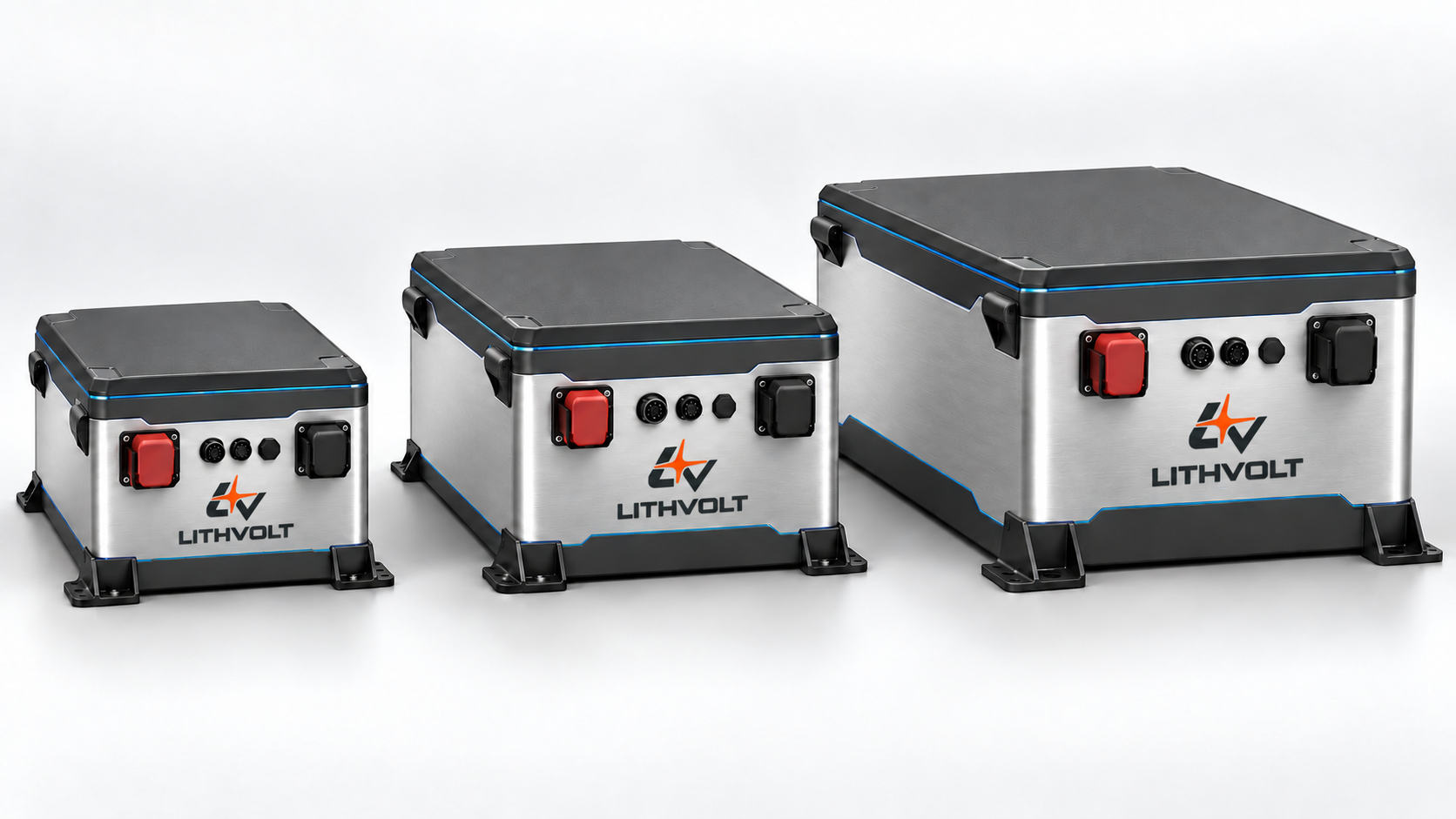
PLATFORM COMPARISON
Use the vehicle voltage and controller as the starting constraint. Capacity then follows the duty cycle, terrain and recharge window.
Legacy conversions
Battery38.4 V 60–105 Ah
ChargingMatched 36 V lithium charger
Confirm controller voltage, current and available tray space.
Mainstream carts
Battery51.2 V 60–105 Ah
ChargingMatched 48 V lithium charger
Strong all-round choice for course, private and utility use.
Long shifts / fleet
Battery51.2 V 171 Ah
ChargingHigher-output matched charger
More energy for demanding duty; weight and charge time must be checked.
Performance / custom
Battery76.8 V 60–105 Ah
ChargingMatched 72 V lithium charger
Requires compatible motor, controller, contactor and full-system validation.
Published products confirm 36 V, 48 V and 72 V markets, including 48 V 105 Ah and 171 Ah options. Range varies materially with cart, passengers, speed, tires, terrain and temperature.
APPLICATION SIZING TOOL
Uses route distance, measured energy per kilometre, terrain reserve and controller peak.
Planning result
Route energy
3.20 kWhBattery minimum
4.52 kWhBattery capacity
94 AhBMS current floor
170 ACharger current target
15 AConfirm range with a vehicle route test; tires, passengers, speed, grade and temperature materially change consumption.
Planning estimate only. Final BMS, cable, fuse, charger and inverter settings must be checked against exact equipment data and local rules.
VEHICLE INTEGRATION
The battery, controller, motor, charger and accessories must operate as one system. A voltage match alone is not enough.
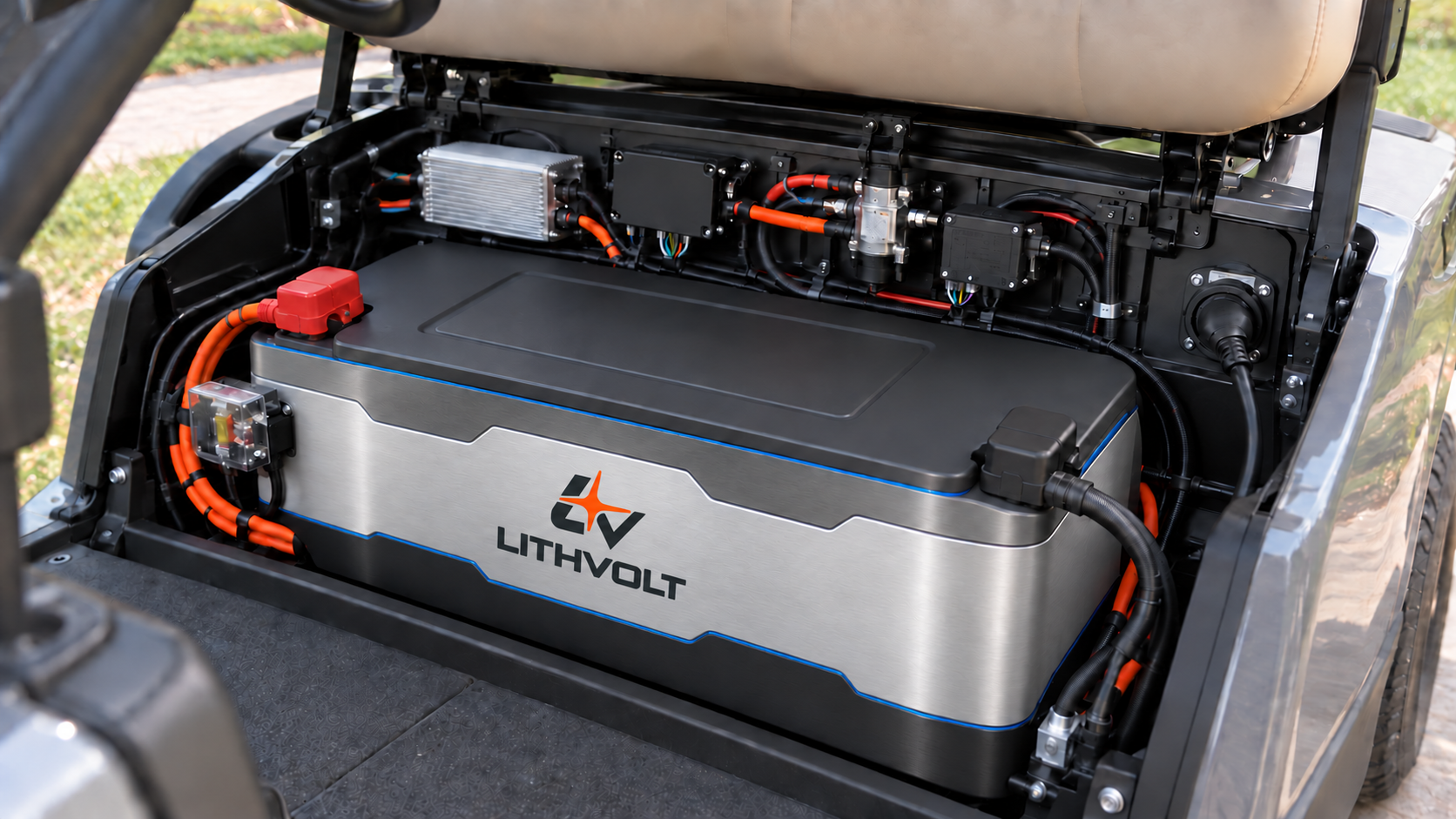
Continuous and peak discharge must cover acceleration, hills and payload without nuisance BMS trips.
BMS, controller and charger must agree on voltage limits, regenerative current and interlocks.
Use a correctly sized isolated DC-DC converter for lights, USB, audio and controls.
SELECTION WORKFLOW
Model, year, controller, motor, existing voltage and tray dimensions.
Distance, gradients, passengers, payload, stop frequency and surface.
Daily hours, turnaround time, charger supply and fleet utilization.
Peak current, regen, CAN, SOC display, accessory voltage and connector.
WORKED EXAMPLE
A 48 V cart using a 51.2 V 105 Ah pack stores about 5.38 kWh nominally. That number does not guarantee a fixed driving range; controller tuning, hills, passengers, tires, speed and reserve policy determine usable distance.
OEM / FLEET ENGINEERING
We tailor enclosure geometry, brackets, current limits, communication and charging kits for manufacturers, conversion partners and course fleets.
Images and ranges are illustrative, not claims of compatibility or certification. Final fit, performance, charger, protection, vehicle compliance and documentation must be validated for the exact cart and destination.
SELECTION WORKFLOW →PROJECT BRIEF
Share model/year, system voltage, motor/controller, tray size, passengers or payload, terrain, daily distance, charging window, destination and quantity.